Muskie
Lake St. Clair Muskie Charter with Captain Matt
Reel Finatic Charters LLC — fishing charters on Lake St. Clair and the Detroit River, operating out of St. Clair Shores, Michigan.
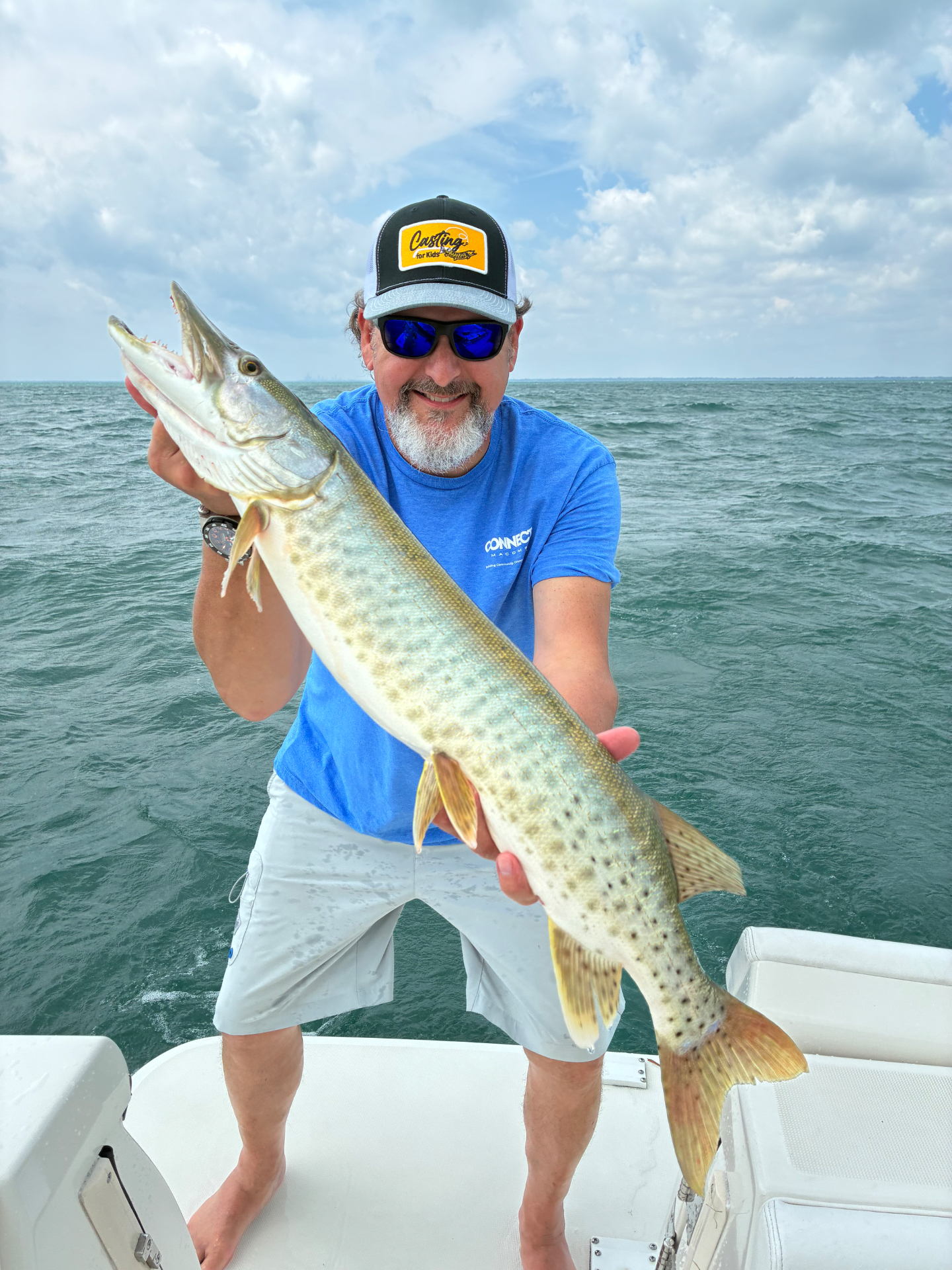
Lake St. Clair is widely called the muskie capital of the world, and it has earned the title. The lake's shallow, fertile basin, clean water and enormous forage base grow a huge population of healthy fish, and fifty-inch class muskies come over the gunwale here every season. Reel Finatic Charters LLC runs guided muskie trips on Lake St. Clair and the Detroit River, out of St. Clair Shores, Michigan.
What makes this fishery special is that it is a numbers fishery and a trophy fishery at the same time. On many lakes a muskie is the fish of ten thousand casts. On Lake St. Clair, multiple-fish days are realistic, which means first-timers actually get to feel what a muskie eat and fight are like instead of just hearing about it.
Muskie seasons on Lake St. Clair
The season opens in early June and the first weeks are excellent, with post-spawn fish feeding in the shallower weed edges and warming flats. June and July trips often produce good numbers of fish in the upper thirties to mid forties.
Late summer is the classic open-water program. Fish suspend over the main lake basin chasing schools of bait, and a well-set trolling spread covers water fast. Fall is trophy time — from September through the end of the season the biggest fish of the year feed heavily, and this is when serious anglers book. Cold, windy November days can be uncomfortable and are often the best days of the year.
How we fish for them
Most Lake St. Clair muskie trips are trolling trips. We pull large crankbaits and rubber baits on a spread of rods with planer boards and line counters, covering miles of water at precise depths and speeds until we contact fish. When a rod loads up, everything happens fast — Captain Matt gets you on the rod, clears the spread and coaches you through the fight.
When conditions line up we cast: big rubber, bucktails and glide baits worked along weed edges and breaks, finished with a figure-eight boatside. Casting is more physical and more visual, and a muskie eating a bait three feet from the boat is something you do not forget.
Every fish is handled for release. Heavy nets, long-nose pliers, jaw spreaders and cutters are on board, and fish go back in the water quickly and healthy after a photo. Protecting this fishery is what keeps it what it is.
What a day on the water looks like
Captain Matt texts you the meeting ramp the day before based on where the fish are and the wind forecast. Rods, reels, baits and safety gear are already on board. After a short briefing we run out, set the spread and start hunting.
Muskie fishing has slow stretches, and Matt fills them by explaining the electronics, the structure, and why the spread is set the way it is. When a fish comes, you will know exactly what to do because you will have been told three times. You get photos of your catch and a very good story.
Trips run 5, 8 or 10 hours, with a combo option that mixes muskie with walleye, bass or perch. Three anglers are included and a fourth can be added. Bring food, drinks, layers, polarized sunglasses and a valid fishing license.
What's included
- All rods, reels, tackle and bait
- Michigan-licensed captain and safety gear
- Fish cleaning and bagging on eating species
- Photos of your catch
- Coast Guard-inspected, fully equipped boat
Every angler needs a valid fishing license — see Michigan and Ontario license info. Full trip lengths and pricing are on the rates page.